

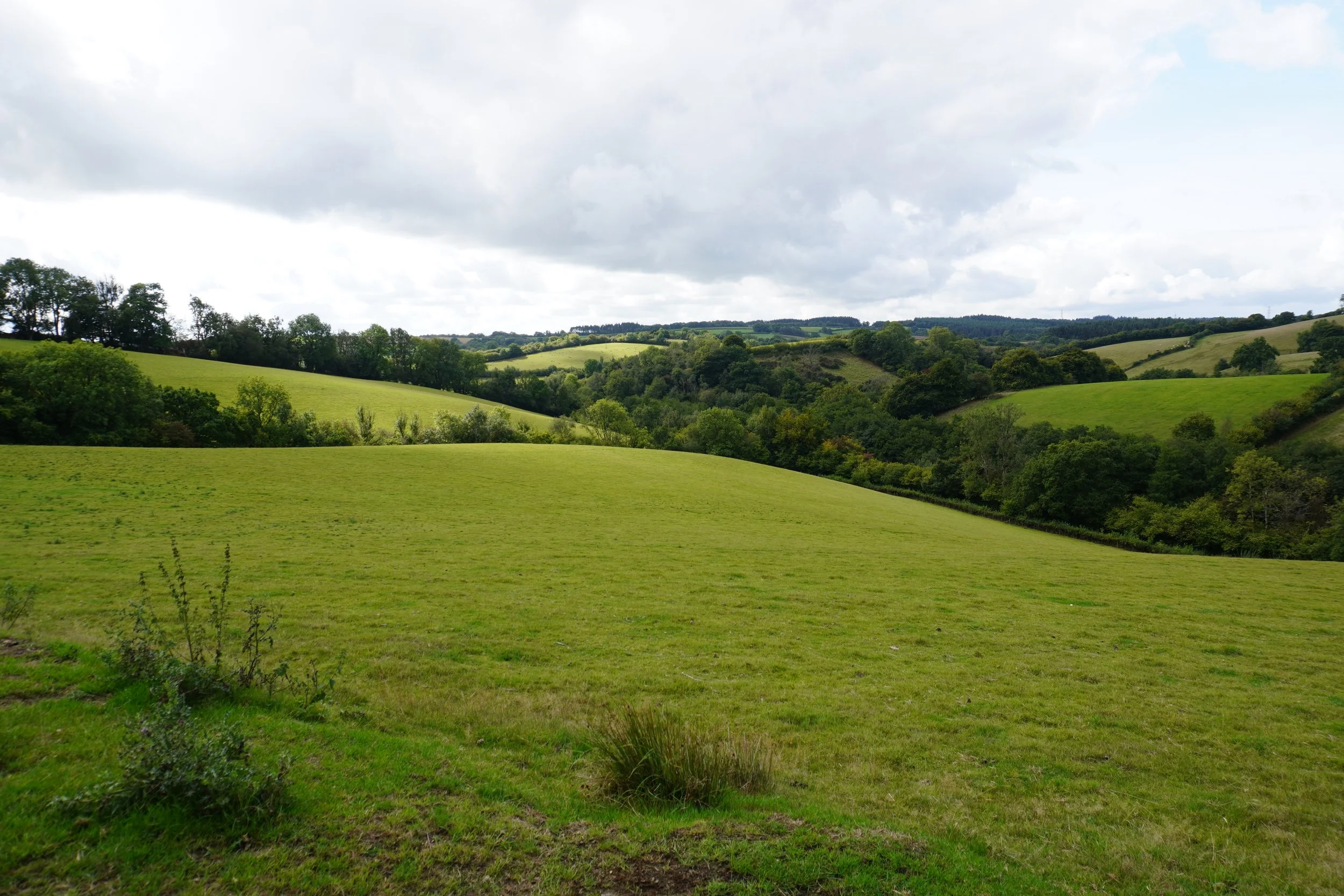
Wildwood Grove
Restoring Headwater Landscapes for Nature, Water, and Climate.
Wildwood Grove is a spring-fed headwater restoration landscape in the River Exe catchment being developed as a hydrology-led wetland mosaic capable of delivering high-integrity Biodiversity Net Gain and river restoration outcomes.
Wildwood Grove is a 29-acre land restoration project near Dulverton on the edge of Exmoor. The site sits at the headwaters of a tributary feeding the Brockey and ultimately the River Exe.
Following agricultural exit in 2025, the land entered an observation and baseline phase focused on understanding the natural hydrology of the valley. Multiple groundwater springs, historic drainage systems, and a defined headwater channel indicate that the landscape historically functioned as a wetland-rich upland flush system.
Restoration therefore focuses not on designing habitats artificially, but on restoring the natural hydrological processes that allow wetlands, wet woodland, and riparian ecosystems to recover.
Understanding the Headwaters
Beneath the pasture fields lies a much older hydrological landscape shaped by groundwater emergence, valley formation, and historic drainage. Historic mapping, LiDAR analysis, and field observation all point to Wildwood Grove functioning as a spring-fed headwater system within the upper River Exe catchment.
Hydrology-Led Restoration
Rather than designing habitats artificially, Wildwood Grove is being restored through a process-led approach that focuses on natural hydrology.
By relaxing historic drainage systems and allowing groundwater to express more naturally across the valley floor, the landscape is expected to transition gradually towards a mosaic of wetlands, wet woodland, riparian habitats and species-rich grasslands.
This restoration framework is being developed in collaboration with specialist ecological and hydrological organisations including the River Restoration Centre, Richard Green Ecology Ltd and Geckoella.
Why Headwaters Matter
Headwater landscapes are the starting points of river systems. Although often small and easily overlooked, these upper catchments play a critical role in regulating how water moves through the wider landscape.
Groundwater springs, valley wetlands, and natural drainage patterns influence the timing and quality of water entering downstream rivers. Healthy headwater systems can slow the movement of water, filter nutrients and sediments, support specialised wetland habitats, and improve ecological connectivity throughout an entire river catchment.
At Wildwood Grove, multiple groundwater springs and a defined headwater channel indicate that the valley historically functioned as a wet, spring-fed landscape. Understanding how this hydrological system works is therefore the first step in restoring the natural processes that support wetland habitats, biodiversity recovery, and improved downstream water health.
Project Development
The restoration strategy at Wildwood Grove is being developed through collaboration with specialist ecological and hydrological expertise, ensuring that the landscape’s natural processes are understood before restoration interventions are implemented.
This work includes ecological baseline assessment, hydrological interpretation of the headwater system, and preparation of a Habitat Management and Monitoring Plan that will guide long-term stewardship of the site.
Historic Spring Records
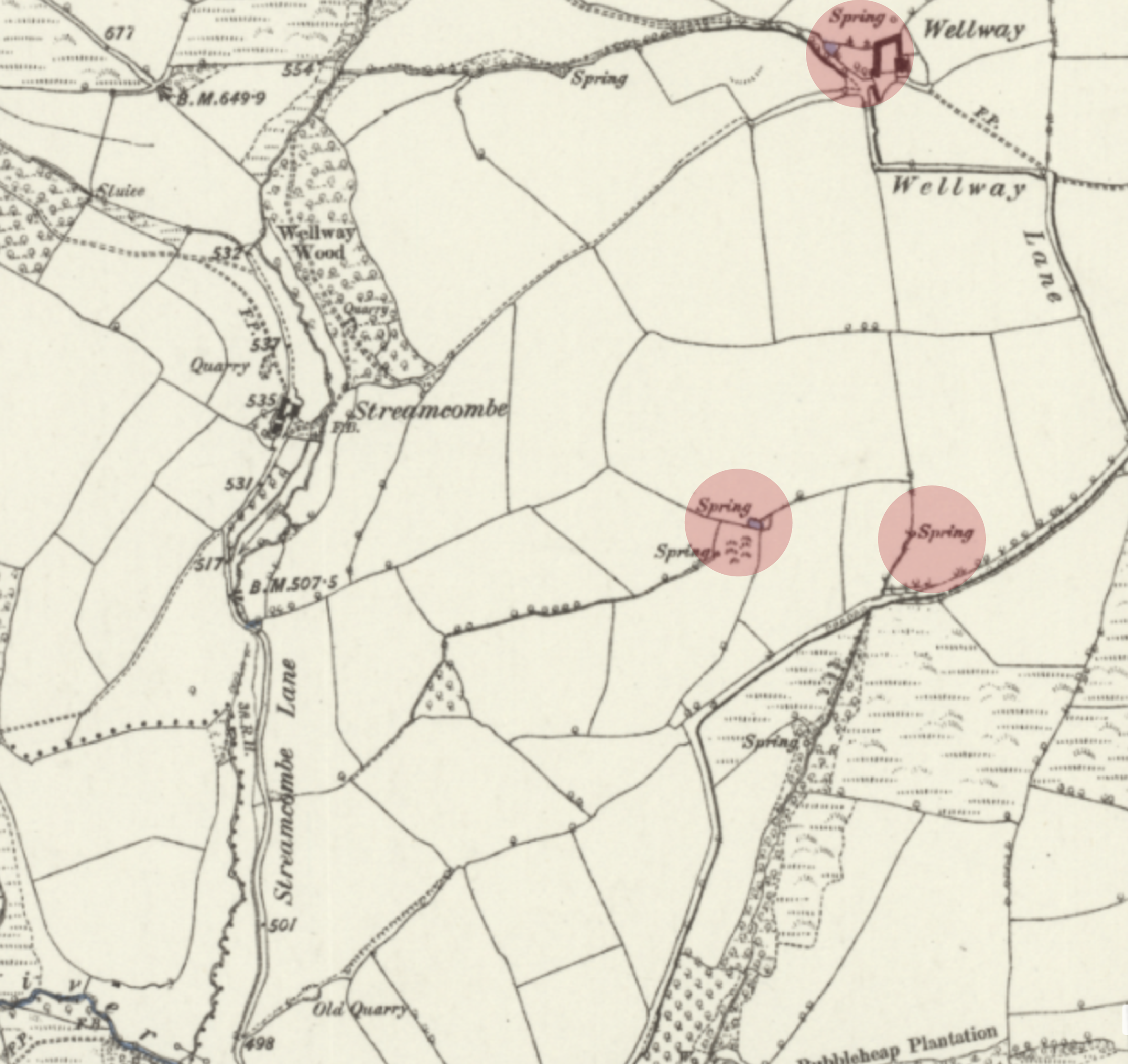
Historic Ordnance Survey mapping records multiple springs in and around the Streamcombe valley. These align closely with groundwater emergence still observed on the site today, indicating a long-established headwater system rather than a recently formed wet area.
LiDAR Valley Structure
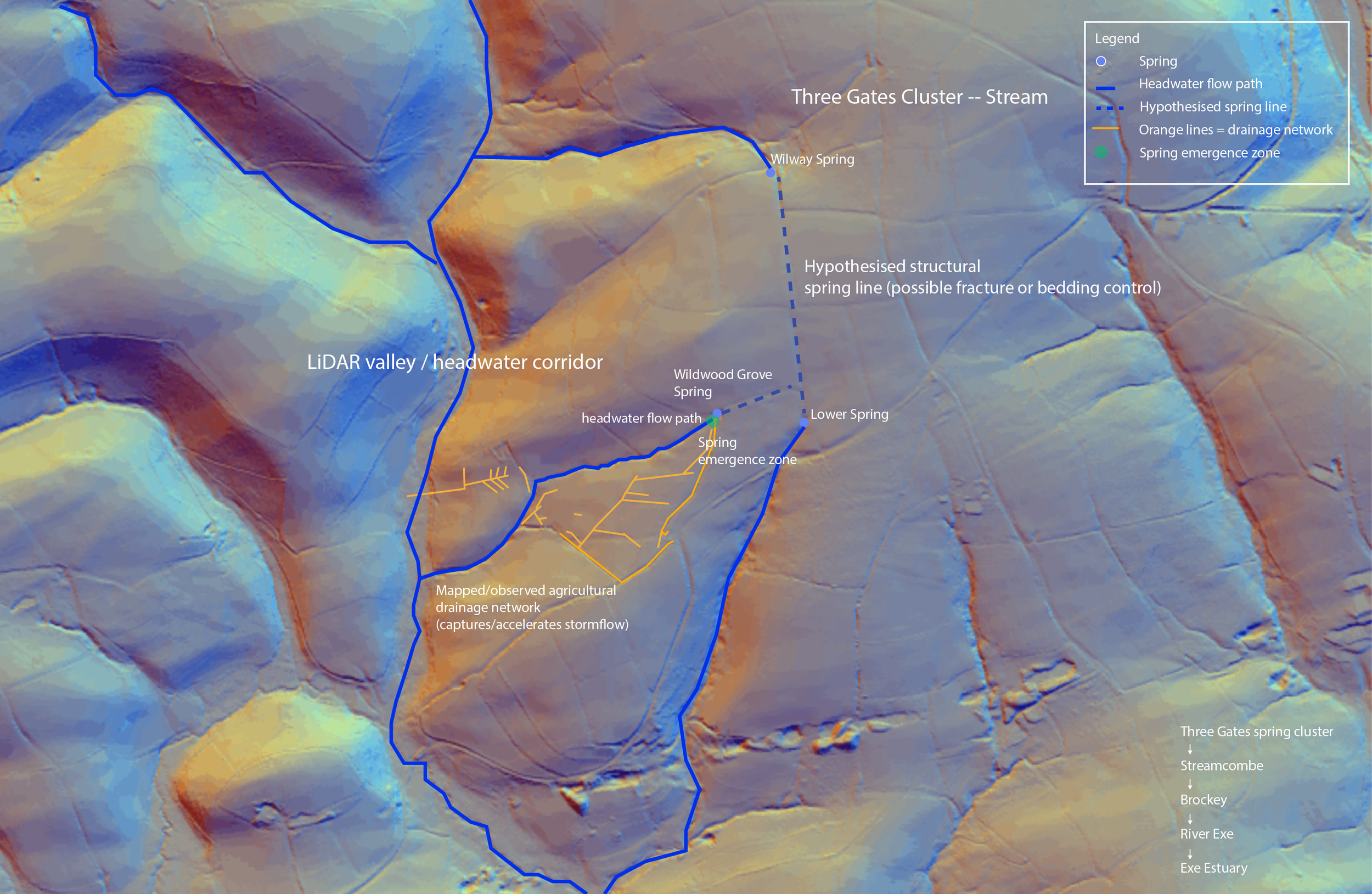
High-resolution terrain analysis reveals the natural headwater corridor, likely spring emergence zones, and the relationship between the valley floor and later agricultural drainage. This helps explain how the landscape historically held and conveyed water.
Catchment Context
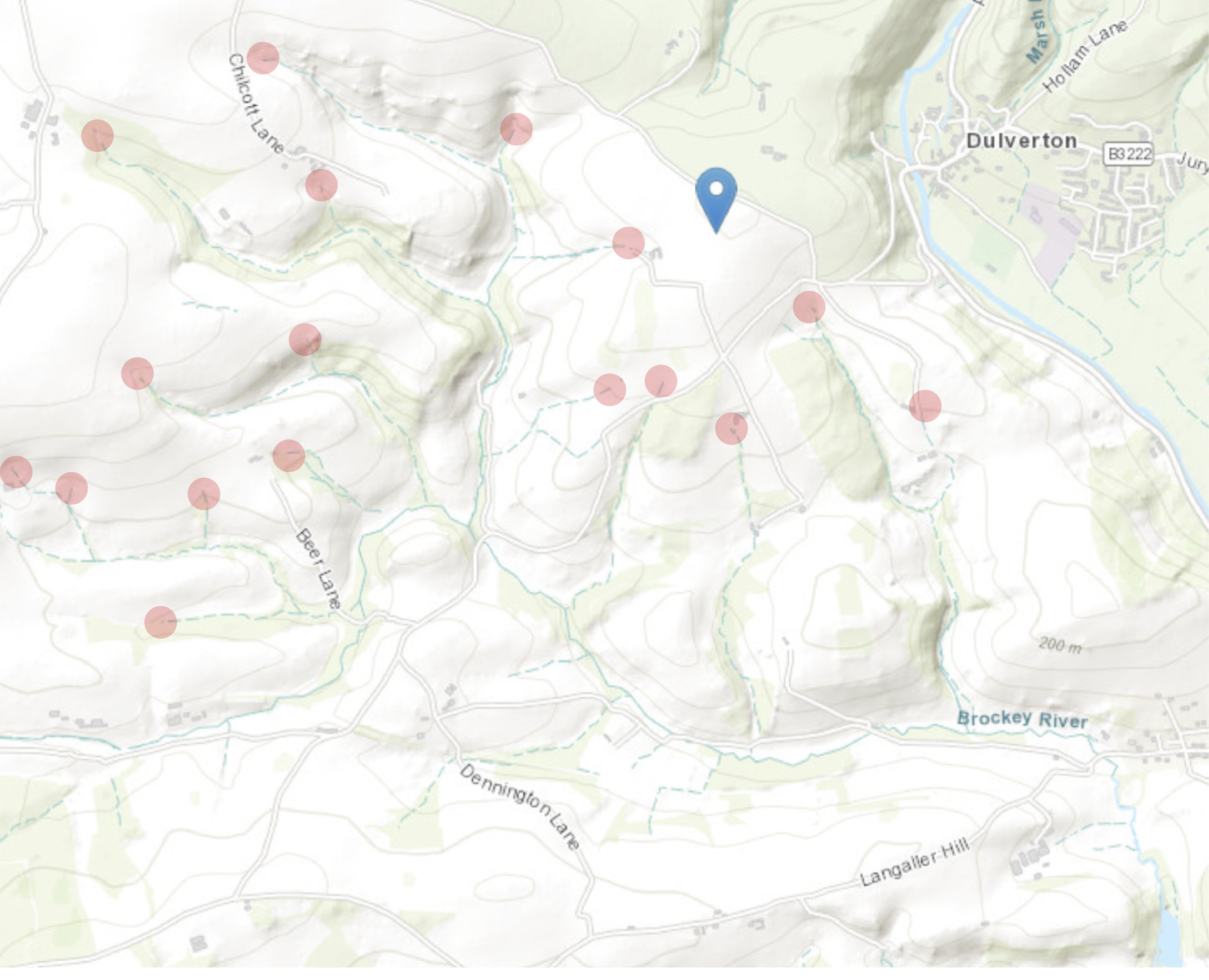
Wildwood Grove sits within a wider headwater network feeding the Brockey and ultimately the River Exe. Although small in scale, headwater landscapes influence downstream water movement, sediment transport, nutrient pathways, and ecological connectivity across the catchment.
Understanding the Landscape
Wildwood Grove is built on four interconnected foundations that guide the restoration of the site and its long-term stewardship.
Hydrology-Led Restoration
Understanding groundwater, springs and valley hydrology as the foundation for ecological recovery.
→ Learn more
Land Regeneration in Practice
Observing how the land responds following agricultural exit and supporting the natural recovery of soils and vegetation.
→ Learn more
Catchment & Policy Alignment
Situating the project within the wider River Exe catchment and emerging nature recovery frameworks.
→ Learn more